Join the best erotica focused adult social network now
Login
MorganHawke
1 month ago
Bisexual Female, 62
United States

Forum

Quote by Loislane
Quote by Bunny12
To me this is all a bunch of contrived B.S. all my writing comes from personal experience, straight from the heart driven by pure inspiration. But that's just me lol


You write poetry so what are you talking about? Morgan is talking about static traits of characters in prose. She is right. Reading this has helped me realise a character of mine needs one.


Oh, is that what's going on?
-- I'm glad I could help, Lois Lane.
Quote by Bunny12
To me this is all a bunch of contrived B.S. all my writing comes from personal experience, straight from the heart driven by pure inspiration. But that's just me lol


In other words, you're not writing Fiction, right?
-- In reality most people do have static traits that signal their personal fears and hang-ups. However, they're nowhere near as obvious. Fiction (especially Hollywood) exaggerates to make it easy to recognize, but neurosis-based behavior quirks are quite real. Ask any psychologist.
Quote by magnificent1rascal
I use static traits in my writing, but I never knew they actually had a name. Thanks!


Yep! They do indeed have a name. Just goes to show that there really is nothing new under the sun. Someone has seen it, done, it named it, and abused already -- and probably a 1000 years ago too.
Ripping Off Plots!

(A Gothic Romeo & Juliet)


Originality is Overrated

When designing a car, why stop to reinvent the wheel if someone else has already done all the research and done it better?

Why work when you don’t have to?

Why struggle trying to find a good story, and interesting characters, when the data on what people already like is right there in front of us?

When it comes to figuring out what is popular in a story, Hollywood has streamlined just about everything: plot, setting and character. A quick perusal of the top box office hits tells us point blank what stories the general public liked Best.

TOP 10 AMERICAN FILMS
(of all time)

1. Gone With the Wind (1939)
2. Star Wars: Episode IV - A New Hope (1977)
3. The Sound of Music (1965)
4. E. T. The Extra-Terrestrial (1982)
5. The Ten Commandments (1956)
6. Titanic (1997)
7. Jaws (1975)
8. Doctor Zhivago (1965)
9. The Exorcist (1973)
10. Snow White and the Seven Dwarfs (1937)

The TOP 10 FILMS for 2010

Tim Burton's Alice in Wonderland
Black Swan
Blue Valentine
Despicable Me
Easy A
The Ghost Writer (UK/Germ/Fr)
The Girl With the Dragon Tattoo
Harry Potter and the Deathly Hallows, Part 1
How to Train Your Dragon

What does this list tell you?
-- In 2010, the viewers preferred Fantasies with a dark twist. Bad guys that weren't so bad, and good guys that weren't so good, endings that were more bitter-sweet than happy, and characters that made human mistakes then faced them, even if they didn't conquer them.

Why Not take advantage of all that plotting & character foot-work and write what people are already looking for only Better -- with SEX?

Ransacking & Renovation
-- Take a look at your personal DVD movie shelf. I bet there’s a whole bunch of movies that are (in your personal opinion,) that could have really used some Sex.

So, DO IT. Yank them off your movie shelf, and write them with SEX. And while you're at it, figure out the flaws in all those stories, and FIX them.

Plots that could have used one more twist.
The tragic ending that could have been happy.
Secondary characters that should have had their own story.
The Heroine the Hero should have preferred.
The Regency Romance that would have made a better Sci-Fi.
The Hero from one story that would have done better with the Heroine from another story entirely.
The TSTL* Heroine that should have been Kick-ass.

(*TSTL: Too Stupid To Live)

Once you've changed the setting, the genre, the characters’ names, appearances and their personal backgrounds… Voila! ~ Instant Brand New ORIGINAL Story!

How simple can you get?

“Wait a minute! Isn’t that STEALING?”
-----Original Message-----
I'm sorry but I think that's just wrong. Apart from copyright infringement issues it seems creatively sterile to me. I realize that every story ever told has already been written but to deliberately steal other people's ideas leaves me with a very nasty taste in my mouth.
-- Concerned about Copying
~~~~~~~~~~~~~~~~~~~~~

Dear Concerned,
- What is so terrible about finding a way to make what’s been proven to work, something already popular, something “Tried & True” – into something fresh?

Borrowing whole plots didn’t stop WEST SIDE STORY the Broadway play, (a direct and unashamed ‘Romeo & Juliet’ rip-off,) from being a tremendous hit, or the Broadway play CAMELOT, (a rip off of TS Elliot’s ‘Once & Future King’) or MY FAIR LADY, (a rip off of the Greek myth ‘Pygmalion’.)

Seriously, Hollywood ransacks and renovates all the time! There must be a million and one Frankenstein, Dracula, Phantom of the Opera, and Sherlock Holmes adaptations. The movie "UNDERWORLD" was openly marketed as a Gothic ‘Romeo & Juliet’. STAR WARS is a carbon copy of Kurosawa’s Samurai/Ninja movie ‘The Hidden Fortress’– including the comedic antics of two highly recognizable ‘Laurel & Hardy’ characters. (For goodness sake, they’re Still in Japanese costumes!)

In case you haven’t spotted it, Walt Disney ransacks and renovates EVERYBODY, and makes a ton of cash doing it too! Just about every single Walt Disney Adventure movie, from BEAUTY & THE BEAST to THE LION KING to HERCULES to MULAN to TARZAN was ransacked from elsewhere. TREASURE PLANET is a very unashamed rewrite of ‘Treasure Island’ – and one of my favorite movies.

The Original Romance?
NOT!

Romance, erotic or otherwise, has only TWO plotlines, so it's kind of hard NOT to follow in someone else’s footsteps. In fact, how can you AVOID it? Really?

The “Happily Ever After” Romance Plotline
(Used in 1001 paperbacks)

The Lovers meet -- and have Issues.
The Lovers' Issues drive them apart.
The Lovers realize that they can't live without each other. "Oh no, it's Love!"
The Lovers battle odds to get back to each other -- fixing their Issues along the way.
He's forgiven, she's forgiven, everybody's forgiven... "I love you!" -- and they shack up together.

The “Romeo & Juliet” Tragic Romance Plotline

The Lovers meet -- and have Issues.
The Lovers' Issues drive them apart.
The Lovers realize that they can't live without each other. "Oh no, it's Love!"
The Lovers battle odds to get back to each other.
He dies, she dies -- and everybody cries over the cruelty of True Love.

The trick to making the well-worn Romance plot original is to ADD another whole Plotline (pick a genre, any genre.).

Romeo & Juliet + horrific disaster from old newspapers = TITANIC
Happily Ever After + High school in the American 50’s = GREASE

To be Perfectly Clear...
I am NOT saying you should copy anyone else's work.

I am merely suggesting a way to jump-start a story by modeling it after a story that's already been proven to work, through popularity, then make extensive changes to disguise the original source.

As long as you shift genres, change the characters around a bit, and don't use any trademarked names or designations, you won't step on any copyrighted toes.

It’s not what you HAVE.
It’s what you DO with it.

When it comes to making Original Fiction, it’s NOT how unique the plot is, it’s Your VISION of that plot that makes it fresh and different!

Alice in Wonderland + CyberPunk = THE MATRIX
Treasure Island + James Bond = NATIONAL TREASURE
Robinson Caruso + Space Aliens = ET
Romeo & Juliet + the Old South = GONE WITH THE WIND

Hollywood ransacks and renovates, then mixes and matches whole plotlines all the time. Look at all those box-office smashes. What other proof do you need?

Enjoy!

DISCLAIMER: As with all advice, take what you can use and throw out the rest. As a multi-published author, I have been taught some fairly rigid rules on what is publishable and what is not. If my rather straight-laced (and occasionally snotty,) advice does not suit your creative style, by all means, IGNORE IT.

How would you write what is happening in this picture?

How would you convey the actions?
The characters?
The setting?
The mood?
(Go ahead and jot something down.)


Frustration is a BAD thing to generate in your readers. Books that frustrate (poor grammar, limp dialogue, wishy-washy action, weak description, over-blown description...etc.) are tossed against a wall. The technical term is: Wall-Bangers.

WARNING: INCOMING RANT!!!
I want to SEE the Story ~ Damn it!!!


My BIGGEST Pet Peeve:Description-less Fiction.
-- I utterly loathe reading a book where everything happens in a colorless vacuum. You don't know where they are, you don't know what they're doing, you don't know what the Characters LOOK LIKE! I despise a book where I can’t SEE, or worse can see only bits of what's going on.

How the heck am I supposed to imagine the scene like a movie in my head without knowing what stuff looks like?

In far too much Erotica it's worse. The sex is detailed but the rest of the story is barely sketched out. If they’re gonna go into that much detail in the sex, they should do the same for the rest of the damned story!

For example, you get a nice juicy sex scene and some sprightly dialogue, but then you get:

She went into the kitchen and got a glass of water.

Then the dialogue starts back up again -- without bothering to even mentioning that she came out of the damned kitchen! WITHOUT a SCENE BREAK! Right in the middle of the damned paragraph without skipping a beat! Hell, it's done right in the middle of the damned dialogue!

This happened because the writer ASSUMED that reader KNOWS that she’s not in the kitchen any more. However, the truth of the matter is that the reader actually thought: "Oh wait, she's NOT in the kitchen any more...!" And then they had to GUESS how how it happened.

HELLO!!!
If you have to GUESS How the character got From position A ~ To position B,
You've been TOLD - Not SHOWN.


SHOW ME - Damn It!

By the time I got to the end of that book, I knew she had a living room, a bedroom and a kitchen, but I still didn't know if she lived in a House, a Condo, or an Apartment, and I didn't know what was in her house other than a couch in the living room and a bed in the bedroom. You KNEW from the sex scenes that the author knew how to write descriptive details, but it was like she decided to be lazy about everything else -- that describing stuff didn't matter as long as the sex was good.

Well, she was WRONG, and Damn it I felt CHEATED!

No Color = No CHARACTER!

When you were a kid, the first thing you did with a new friend is check out their bedroom.

Why? Seriously, think for a minute. Why did you want to check out the other kid's room?

To see what kinds of cool toys they had sure, but also to find out what KIND of kid you were playing with. The kinds of toys and pictures in their room told you what Kind of Kid they were.

Consider the room the kid Sid had from the movie Toy Story.


How much of Sid's character was in his bedroom?


ALL OF IT.

Now, why would anyone leave such a gold-mine of character information; their HOME, their Clothes, their Stuff... out of the story?

I dunno, but it happens ALL THE DAMNED TIME.

There is way, Way too much Telling instead of Showing going on in the fiction I’m reading.
Too many stories read like a TV show with the picture too snowy to see anything clearly. Where the heck are they? What are they doing? How are they doing it? Gimme some Details! Gimme some color and textures! Some sounds! Some flavors! Some aromas!

Gimme some DESCRIPTION!

But...! But...! But...!
~~~~~~~~~~~~~~~~~~~
"Descriptive detail, like any other element of fiction, should be present ONLY to develop character or advance plot. Too much leads to excessive wordiness, which in turn kills the pacing. It's not necessary to include details the reader can be expected to assume because they are normal life events. So, someone going to the kitchen to get a glass of water would be expected to return when she was finished, and that information isn't necessary. If the next part is dialogue between hero and heroine, her return is simply accepted." -- A well-meaning and very nice editor.
~~~~~~~~~~~~~~~~~~~~

Bull...!
-- If she went to the kitchen in the fist place, it SHOULD be forwarding the plot. If getting that glass of water isn't an element of either "what has happened", "what is happening" or "what will happen" she should have never gone into the kitchen. BUT~! If that glass of water is important, so is her trip to the kitchen to get it. Therefore it should be SHOWN instead of TOLD.

ANYTHING that isn’t necessary to tell the story DOESN'T BELONG in the story!
If it CAN be pulled out - it SHOULD be pulled out.

If it's Important enough to be Mentioned, it's Important enough to be DETAILED.


Harrumph!

"A picture is worth a thousand words."
-- Unless you are writing kiddie books, you don't get a picture, you get Words to illustrate your story. USE those Freaking Words! You don't need the whole thousand words to give me the picture, but SOME would be nice. Damn it!

If you want to write Fiction with clarity, VISUALIZE what is happening in your head. Play the scene out in your imagination and view it, just like a movie. If it shows up in your mind's eye, it belongs on the page. Okay? smile

Descriptive ASSUMPTIONS.

Normally, description-less fiction is Not what the writer intended. Usually it's a case of Oversight -- an Assumption. The writer saw the scene in their head and jotted down a few cues that would trigger the picture that they envisioned and ASSUMED everyone else reading those phrases would see what they saw.

Guess what? They DIDN'T.

The Reader always sees what THEY want to see unless you force them to see something else.

"They fucked, and it was glorious."


I can guarantee that no two readers (or writers) saw what I envisioned when I wrote those words.

The Writer's job is to SHOW the fucking and Convince the reader that it was glorious without actually Telling them. You have to Seduce the reader into getting all hot and bothered, so they come out of the book thinking; "Wow that turned me on so much... It must have been glorious!"

You DON'T need blocks of descriptive text to get your point across, but the reader CANNOT see what the writer is trying to show them -- pictures or feelings -- without descriptive cues, preferably Sneaky descriptive cues.

No one likes to be pummeled. We prefer to be, enticed, tempted, and seduced -- not assaulted. A handful of well-placed descriptive words sprinkled here and there, really enriches an otherwise blank blue-screen imagination, without beating the reader over the head.

So HOW do you do just that? Go here: Tricks for Writing DESCRIPTION Read that.

TEST TIME!!!
-- You read the linked essay right? Good! Now how would you describe that picture at the top of the page? Can you make me FEEL the Passion?

DISCLAIMER: As with all advice, take what you can use and throw out the rest. As a multi-published author, I have been taught some fairly rigid rules on what is publishable and what is not. If my rather straight-laced (and occasionally snotty,) advice does not suit your creative style, by all means, IGNORE IT.
Quote by GallagherWitt
Perfect timing with this thread, Morgan. I just realized one of my main characters has a tendency to shoot off his mouth without thinking about it, which is a major catalyst for the conflict. biggrin


An excellent example of a static trait if ever I heard one.
Quote by DirtyMartini
The Static Traits...sounds like a good name for a band...what do you think?
Neurotic Rock at it's finest..."The neurosis with the mostest"...hmmm, I can see the possibilities...


Actually, that sounds cooler than Deaf Leopard. (Def Leppard)
Quote by lafayettemister
You two are way too smart for me. My attention span is shorter than my ... I'm doomed to be very subpar at the modest level of writing I do. This is over my puny head.


Give yourself time. You'll catch up. smile
Quote by LadySharon
...I never noticed the neuroses in The Mummy and Beauty and the Beast until you pointed it out.


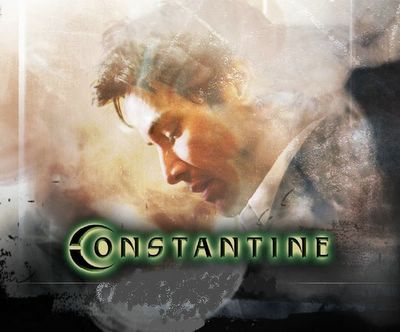
(Evil Grin) But now that you know, you'll start seeing them EVERYWHERE. The movie Constantine is jam-packed with them.
The STATIC TRAIT
Secret Weapon of the Clever Writer


The Static Trait is the small personal HABIT an individual character displays which reveals their personal Neurosis, their driving NEED, especially in stressful situations. This habitual or even ritual behavior acts as both their greatest source of trouble and the linchpin to their success. It's the individual character's “Accident Waiting to Happen”.

The most obvious place to find visible Static Traits is in both Comedies and Tragedies. These stories (and movies) RELY on their characters' Static Traits to linchpin the plot.

What made Laurel and Hardy so funny, were the little neurotic habits -- the static traits -- that would appear under stressful situations. Abbot and Costello built whole routines on Bud Abbot’s little twitchy responses. The climactic scene in every one of their movies involved Abbot in a panic attack. You spent half the movie going “Oh no! Don’t! Don’t! Don’t!...AH! He did.”

I don’t watch tragedies as a rule, but just about every Greek play I’ve read involves the Protagonist acting on their Neurosis, the emotional need they can't -- or won't -- control which brings them crashing down.

Pandora acting on her uncontrollable Curiosity – opened that box of ills.
Paris acting on his uncontrollable need for Love – judged Venus as the loveliest goddess in a contest with Hera and Athena, to gain the love of the most beautiful woman in the world. Unfortunately, she was already married to a powerful and vindictive warlord.
Oedipus acting on his uncontrollable need for Recognition – killed the king and married the queen, who just happened to be his biological parents.
Arachne acting on her uncontrollable Pride - bragged that her ability to weave was greater than a goddess's and was turned into a spider.
Prometheus acting on uncontrollable his need for Revenge - gave fire to mankind and was thus chained to a rock to be eaten alive by buzzards for the rest of eternity.

In stories that are Not tragedies, this neurosis-based habit DOES cause their downfall, but also comes to their rescue at the Climax then CHANGES by the end of the story, quite literally Showing that the character has conquered their neurosis.


The movie The Mummy is loaded with static traits.

Just about every single character in the movie had a static trait based on their personal neurosis – and either lived or died because of it.

Evelyn’s (Evie) personal neurosis was her obsession with being an Egyptologist. Her static trait had to do with books.
-- If it was a book, she had to touch it. Evie’s opening scene defined her character – she was filing books and knocked over an entire set of bookcases (rather like dominoes) because she simply HAD to put that book where it needed to be. The entire catastrophic release of the Mummy happened because she simply HAD to have (as well as open and read) the Book of the Dead.
-- Her Trait came to her rescue because her Habit allowed her to be able to Read ancient Egyptian, allowing her to be able to not only find the correct book to dispel the Mummy, but know which spell was the right one to use. She conquered her neurosis when she allowed the book to be destroyed.

Jonathan, her brother’s personal neurosis was greed. His static trait was kleptomania.
-- If it was small and shiny, he had to have it. His opening scene involved showing off to his sister his latest theft. Because of his habit for picking up shiny things, he never quite lost the object he stole – the key to the Book of the Dead.
-- His trait came to his rescue when he pick-pocketed the needed 'key' from the bad guys. However, he didn't conquer his neurosis. He walked out of that temple with a huge stash of gold.

Rick' O'Connell’s personal neurosis was that he was an outsider. He never quite fit in with whatever group he was with – even his fellow Americans.
-- His solution to everything, his static trait was “fight it”. He was constantly leaping into one fight after another. Evie met him while he was in jail for being in a brawl. In every scene involving an attack of some sort, he was the first one to dive into the fight.
-- His trait came to his rescue when he needed to go on a one-on-one battle with a supernatural creature without immediately dying. He conquered his neurosis when he allowed Evie to destroy the monster with a spell rather than trying to do it himself.

Beni’s personal neurosis was cowardice. His static trait was freezing in place and shivering.
-- He ended up working for Imhotep, because he simply did not have the guts to run away.
-- His trait NEVER came to his rescue, and in fact destroyed him.

Imhotep’s (the Mummy) personal neurosis on the other hand, was love.
-- He got into trouble – and became the Mummy - because he was in love with the pharaoh’s concubine. Everything he did was to get his one true love back from the dead. His static trait was his single-minded focus on regaining his lost love – at any cost.
-- Because Evie resembled his beloved, his neurosis made him grab for Evie -- which was his biggest mistake. If he had grabbed any other female, he would have gotten away with the resurrection of his beloved.


CONSTANTINE is very much a “character-driven” movie where a character’s personality (and personal neuroses,) ruled the results of any given crisis.

Those that changed and adapted – lived.
Those that couldn’t – died.

AND ~ Every character had a Static Trait, a Habit that outlined their individual neuroses.

> Constantine's static trait was chain-smoking.
> Angelica used a gun to fix all her problems.
> Balthazar a half-demon, flipped a coin between his fingers.
> Gabrial, an angel half-breed, liked to pontificate on how very noble human-kind could be -- if their natural selfishness didn't get in the way.
> Beeman John's buddy that supplied interesting toys, and hard to find artifacts -- collected bugs.
> Chas a young cabby, and John's other buddy, wanted to be an exorcist like John, so he was forever trying to follow John into dangerous situations.
> Father Hennessy, another of John's buddies, was an actual exorcist with a talent for sensing evil - though he couldn't actually see them the way John could -- was an alchoholic.

If they faced and conquered their neuroses, their Static Trait changed – a visible sign of the change that had happened within the character.

Of course, only a few people in the whole movie fixed their issues and changed their static trait. The rest died. However, being a Horror movie, this was pretty much expected.

How to use this in Fiction…

Start with your character’s personal neurosis and pick a small habit that shows their personal neurosis in action. This Habit should get them Into as much trouble as it gets them Out of trouble, and it should be the linchpin that either sets off or defuses the climactic scene.

Having a hard time finding your character’s Personal Neurosis?
-- Try looking at your character’s core Motivation. What obsessive habit would define this?

In Walt Disney’s Beauty & the Beast
-- Gaston’s motivation was his Selfishness in the form of Narcissism. “I deserve the best!” This was reflected in his static trait of always looking in the mirror. Even when hunting the Beast, he stopped to look at his own reflection.
-- Beast, in complete reverse of Gaston, utterly Refused to look into mirrors because his Original personal neurosis was exactly THE SAME as Gaston’s: Narcissism.

They were BOTH obsessed with their APPEARANCE, but then, the movie’s Premise was all about “Looking Beneath the Surface”.

In Erotic Fiction...
-- The Static Trait should be Sexual in nature.

A woman who wears skimpy clothes.
A guy who wears tight jeans and/or leaves his shirt open to the navel.
Long Hair on either gender. This IS a sexual trait!
Fur, Leather, or shiny Plastic clothing on either gender.
An oral habit such as licking the lips, biting the bottom lip, chewing on pens, sucking on lollipops, or even smoking.
Physically Touching anyone they speak to.
Posing provocatively instead of merely sitting or standing.

For another example...
-- One of my Static Traits is redefining difficult concepts into simple terms. This comes from my obsession to write as clearly and concisely as I can, and is motivated by my personal neurosis of Avoiding Reality – by creating fantasy worlds real enough to hide in. (grin)

Enjoy!

DISCLAIMER: As with all advice, take what you can use and throw out the rest. As a multi-published author, I have been taught some fairly rigid rules on what is publishable and what is not. If my rather straight-laced (and occasionally snotty,) advice does not suit your creative style, by all means, IGNORE IT.
Quote by GallagherWitt
Agreed with both of you. Too much detail becomes tedious, and it muddies all the IMPORTANT details. Assuming it doesn't put your reader into a coma first...


No details at all can be just as bad. It's like I'm listening to a radio show -- without the background music or sound effects.
Quote by nicola
...His attention to detail, overly so a lot of the time, makes it too difficult for me to enjoy the story. You're constantly stopping to try and create the image he's painting, rather than naturally creating your own.


Tolkien could be the same way. I swear, he described so much and in such detail that sometimes his stories were more like travelogues.
Quote by GallagherWitt
Me too. But you can stop dragging me around by my hair if you want to. You don't HAVE to. I'm just sayin'. If your hand's getting tired or somethin'. It's all good if you want to keep doing it too...


Bu your hair is so pretty and soft...!
-- Fine, I'll find another body part to grab onto.
Word Count - My biggest Nightmare.

It’s much easier for me to go long than it is short. Once I started writing full length novels, it became pathetically easy to run too long.

In the past two years, the shortest story I've been able to write was just short of 4000 words. (I was aiming for 2000.) 3 stories I originally planned for 20k (20,000 words) - went to 40k, (40 thousand words.) I have the detailed outlines for 3 more that were originally supposed to be 40k. According to my outline, all three of these want to be full length 100k novels. Sigh...

Avoid Whack-Jobs ~ Write Fresh!

I'm known for my water-tight plotting. My background is in writing Advertising Copy, so I tend to write very, very spare. Once a story is completed I CAN'T cut. There's nothing TO cut. No extra nothing. Every single thing in my stories has a reason to be there.

I'm lucky. If the word count doesn't come out exactly right my Publishers will normally take the story anyway. In most cases they ask me to ADD scenes. (I have yet to be asked to delete a scene.)

But ~! If I'm writing for an anthology, I'm dealing with a hard-limit. The story HAS to be the correct length or it won't fit. If I get it Wrong? I'll write a whole new story rather than attempt a rewrite.

It is always better to have TWO sellable stories
~ than One carved down beyond recognition.

If your plot is tight -- everything is absolutely necessary to make that story happen, DON'T waste your time cutting! Writing a whole new story is actually faster, and far less stressful. This way you have two stories for sale instead of one badly mangled tale.

Deadline = No Time to Waste on the WRONG Story!

When I am on deadline and I am dealing with a hard word-count, I don't have time to waste on false starts so I do a detailed plot outline before I write. (Actually I do a detailed plot outline for everything I write. I'm what you call a Plot-Whore. *Grin.*)

Novella Plot
20,000 to 60,000 words
One Event that changes the Characters' lives
8 major movements:
~~~~~~~~~~~~~~~
ACT ONE
0 – Overture - Alarm
1 - Introduction - Denial*

ACT TWO
2 - Rising Action - Anger*
3 - Climax / Reversal - Bargaining*

ACT THREE
4 - Falling Action - Despair*
5 - Crash - Sacrifice*

ACT FOUR
6 - Confrontation - Acceptance*
0 - Denouement - Resolution
~~~~~~~~~~~~~~~
16 chapters at 3.75k words each = 60k
8 chapters at 3k words each = 24k
~~~~~~~~~~~~~~~
(k=1000)

3 Main characters: Hero / Heroine / Villain
(Proponent / Obstacle Character** / Adversary)
Only 1 or 2 POV characters - 1st Person or 3rd Person Limited


* Note: Character Arc: Denial - Anger - Despair - Bargaining (Sacrifice) – Acceptance: the Stages of Grief.

**Note: The Obstacle Character is the Nay-sayer that possesses the opposing opinion. In a 3-character plot, the Viewpoint Character tends to play opposition for both the Adversary and the Proponent.

For the HARD CANDY anthology, I had a hard limit - 20 to 30k.
-- By outlining my ideas, I discovered that 3 of my story concepts needed too high a word count. All three novel-sized ideas went into my Unfinished Projects folder, this way I didn't waste all my deadline time writing something I couldn't use.

When I finally put together a story that had all the necessary criteria for the anthology, I still had a story that was double the length of the other stories by the other two authors. I contacted the publisher and told her what I had. I was lucky. Both of the other contributing authors ran short - exactly 20k, so there was room for my 40k monster.

Why did my anthology story run to 40k?

The publisher wanted a ménage, three sexually involved main characters, in a cross-genre of sci-fi / fantasy. This was for an Erotic Romance publisher so a “Happily Ever After” was essential - the ménage set had to become a 3-way relationship.

Both sci-fi and fantasy take a lot of detailing to do right. (You can't throw a fairy into a story without explaining what it's doing there or how it got there, in addition to having a reason for its presence.) In order to pull off a logically sound sci-fi / fantasy mix, I used paranormal elements as the fantasy element.

The complications of the mixed genre forced me to add an antagonist, a villain to have a USE for those paranormal elements. I ended up with a total cast of 5 main characters: a cyborg, a telepath, a fortuneteller and a man haunted by a ghost - the ghost being character #5, all running around on a space station.

Then there was the sex.

In order to cut the encounters to as few as logically possible, I started the story with two of the ménage characters already sexually involved, and then I added my viewpoint character.

That meant that I needed a minimum of 3 encounters. One where the viewpoint character became sexually involved with one of the established couple ASAP, then a ménage scene to show the beginnings of their 3-way relationship, and finally another ménage at the end after all the story problems were solved, to show them as a viable 3-way relationship and deliver on a happy ending.

The final count for the Sci-Fi / paranormal story FORTUNE'S STAR came to just above 44k.

From the editor at Loose Id, on FORTUNE'S STAR:
"Excellent work. I was almost hoping I would find some extraneous stuff to cut, to make it shorter, but I found that the pace moves along very well and there isn't anything that's not vital to the story. It really keeps you guessing but is not too confusing."


Tricks I use to Limit word count:
- Limit the CAST to Only the absolute Essentials to tell the story.
- The closer to the main event - the shorter the story.
- Simplify the genre. Contemporary stories take far less descriptive detailing than Sci-Fi or Fantasies.

- Story Under 10K - You only need 2 characters - the two people having sex. Start the story with them already getting nekkid.
- Story Over 20k - This calls for a Problem, (a plot twist,) to come between the main characters.
- Story Over 40k - This calls for an actual Antagonist, a villain, in addition to a problem to solve -before the main characters can have their "Happily Ever After".

Expanding Word Count is Easy.
- add characters
- add problems
- use a genre that takes a lot of detail
- cross genres

In Conclusion...
- If you are dealing with a hard word-count limit, and a deadline, outlining the entire plot to your story, before you write it, will save you time and grief.

For those of you interested, Fortune's Star can be found here.

DISCLAIMER: As with all advice, take what you can use and throw out the rest. As a multi-published author, I have been taught some fairly rigid rules on what is publishable and what is not. If my rather straight-laced (and occasionally snotty,) advice does not suit your creative style, by all means, IGNORE IT.
Quote by GallagherWitt
...Of course environmental and sensory details are important. I'm not saying they aren't. Quite the contrary, actually: They're so important that they should be used sparingly and judiciously so that each one registers in the reader's mind. ... Less is more. Much more.

...Make every detail count. If you're describing someone's living room, give me a reason to care how the furniture is arranged, whether or not it matches, and what knicknacks are on the mantle. For the love of God, if you're going to spend a page and a half telling me about a chair, you'd better be subtly telling me about something besides the damned chair.

Less is more. Subtlety has more impact. Don't insult your reader's intelligence.


Excellent Advice!
-- I'm so glad I dragged you in here.
Quote by sprite
do what i do - threaten them with deletion if they fall into line!


Icon Love!
Quote by GallagherWitt
It's helping, actually. smile Biggest problems I'm running into now relate to some logistics (getting character X in the vicinity of character Y) and motivations (WHY is character X going to where character Y is), but the overall plot arc is working. biggrin


Excellent!
-- To get one character in the vicinity of the other, try something simple and ordinary. Murphy's Law can also be amazingly useful!

> They stop at a convenience store to buy a snack.
> They stop at a coffee shop because they always stop at this coffee shop before (or after) work.
> They stop at a gas station.
> The car got a flat.
> The plane had to set down in a different city because of weather conditions or engine issues and now they're stuck on an overnight wait, so they go to a local hotel.
Quote by GallagherWitt
...And now that my outline just got hijacked for the 17th time, I'm going to give Morgan's technique a go and see if that helps me sort it out. *mumbles about obnoxious characters*


Let me know if it works!

Three Questions ~ A Quick & Dirty Plotting Trick


The easiest way for me to craft a story at top speed is by picking my characters then deciding on the Final Climactic Scene. I plot the rest of the story to make that scene happen.

How do I START with Characters?
- I ask Three Questions:

1 - What are you, and what do you do?
2 - What do you want?
3 - What's the worst possible thing that could happen to you?

In Action!

1 - I am a Spy and I steal secrets from my enemies.
2 - I want to destroy my enemy.
3 - Convince me that I've been working on the wrong side all along.

1 - I'm a Vampire and a predator.
2 - I need blood to live.
3 - Make me fall in love with the one person I will destroy with my appetites.

"Three Questions" is the simplest plotting method out there, and one of the most useful for short stories. The main character’s "worst possible thing" gives me the Ordeal, the darkest moment in the story leading to the confrontation at the Climax. I arrange the rest of the story, the PLOT, to get them to that moment.

When you're writing a Novel, these same questions should be used to outline the drives and motives of ALL THREE of your main characters: Adversary, Proponent and Ally, (Protagonist / Antagonist / Obstacle Character, or more simply, Hero / Heroine / Villain.)

Once you know the answers to these questions for all three main characters, you have your entire story.
- Combining the "worst possible thing" for each of them creates your story's Ordeal (the Darkest Moment).
- The Inciting Event, (what starts the story rolling,) comes from "who they are, and what they do."
- Your Climax comes from the conflict of "what each wants".

Example:


Leon: The Professional
1 - What are you, and what do you do?
2 - What do you want?
3 - What's the worst possible thing that could happen to you?


Proponent
1 - I am a kid and my family has just been killed.
2 - I need to destroy my enemy – before he destroys me.
3 – Find me the perfect assassin – but make him too honorable to allow a kid to kill.

Ally
1 - I am a professional assassin with strong morals. I don’t kill kids or women.
2 - I want to do my jobs and remain hidden from the police.
3 – Have me take pity on a kid and hide her from her family’s killers, but make her determined to exact revenge – against the police. Oh, and make her a loud-mouth too.

Adversary
1 - I am a crooked (and happily insane,) cop.
2 - I need to protect my secrets.
3 – Make the one person that knows my secrets a child – with a professional assassin for her guardian.

Inciting Event
-- Escaping the murder of her family, 12-year old Mathilda takes refuge in the apartment next door, with Leon, a professional assassin.

Ordeal / Dark Moment
-- Having learned how to handle a gun, Mathilda trails the cop that murdered her family all the way to the precinct to kill him -- but she’s never actually killed anyone before.

Climax
-- The police --led by the insane cop-- track Mathilda back Leon’s, and all hell breaks loose.

3 Questions -- In Erotic Fiction

To BE Erotic Fiction the SEX must turn the Plot, so everything shifts - Character AND Plot to make the Sex Scenes count.

The Difference between EROTIC & EROTICA
-- Too many people seem to think that Erotica is any story with Sex in it. This is FAR from the Truth. A story with sex in it may be Erotic, but it is not EROTICA. Erotica is NOT defined by how Much sex you have in the story, but WHERE you put the sex -- and WHY.

> An EROTIC story has sex in it.
> EROTICA is a story where the PLOT hinges on Sexual Events.
> EROTIC ROMANCE is a story where Plot-Turning Sexual Events maps the progress of the Love Relationship DURING an Adventure.

In the average vampire story, the vampire's NEED for blood is the lynchpin for the entire plot. Whether or not he succeeds in getting that blood from the other characters rules every major turning point in the plot.

> If the vampire has sex - then the plot is erotic.
> If the vampire has to have sex to drink the blood he needs, then the story becomes Erotica.
> If the vampire has to have sex to drink the blood he needs, and falls in love with his donor, and THEN has bad guys to deal with to protect his new love, then the story becomes Erotic Romance.

Okay? Now, on with the lecture!

To use the “Three Questions” in Erotic Fiction, the answer to one (or more) of those questions should be SEXUAL.

1 - What are you, and what do you do?
2 - What do you want?
3 - What's the worst possible thing that could happen to you?


In Action!

1 - I am a Kinky Dom and I like extreme forms of SEXUAL DISCIPLINE.
2 - I want a lover that needs the type of SEX I like to give.
3 - Convince me that my lover would be better off without my sexual appetites interfering in their lives.

The PLOT would revolve around the characters' problems of Accepting their unusual sexuality.

By the way, this is the plot for the movie: Secretary


The BIG Secret: The Smaller the cast – the Shorter the story.

By focusing on only THREE main characters, you keep your story TIGHT. You won’t get entangled in subplots that eat space and revision-time -- trying to chop them back out when you run over your word-count.

In Conclusion...
-- THIS is the fastest way I've found to get a first draft written. Remember, the only thing that can't be fixed is a Blank Page.

DISCLAIMER: As with all advice, take what you can use and throw out the rest. As a multi-published author, I have been taught some fairly rigid rules on what is publishable and what is not. If my rather straight-laced (and occasionally snotty,) advice does not suit your creative style, by all means, IGNORE IT.
Erotica Without Sex?
Is Erotic Tension EROTIC Enough?


-----Original Message-----
"Can a story still, be considered erotic without lots of sex? Can the sexual tension throughout the story make it erotic?" -- Shy-writer
~~~~~~~~~~~~~~~~~~

YES! A story can be VERY erotic without actually having sex. The point of eroticism is to excite the Reader, and I'm sorry to say even graphic sex is not always exciting. However...

If you label a story Erotic, the Readers are going to expect Sex.

My publishers all want stories with graphic sex, but they also expect a compelling story. In fact, many of them will take a good story with lousy or very little sex over a wall-to-wall sex extravaganza. However, they Do expect at least some sexual content because that's what their readers are shopping for.

If you don't want people to expect sex in your story, don't use the word Erotic to describe it. Many authors that don't write detailed love scenes, but do have a lot of sexual tension use the word Sensual to describe their work.

The trick to Eroticism is ANTICIPATION.
The Catch is DELIVERY.

If you build an expectation, (whether you're writing erotica, romance, horror, or suspense,) you had better deliver on it. If you don't - you will Pay Dearly! Think: Hate Mail. This of course comes after your book has been thrown across the room by a frustrated reader, and already hit the wall.

Lack of Delivery is like being on a roller coaster that has this HUGE climb and then drops about three feet - and stops. The riders look at each other and say: "What happened? I thought I was in for this big swooping, falling Whoosh of a ride? Where’s the whoosh?"

Just like with that roller coaster, Erotic build-up must have a corresponding action sequence of some kind (a whoosh) to diffuse the tension generated by anticipation.

This is true in any genre that uses anticipation, whether it's erotica, romance, horror or suspense. No matter what you write, the anticipation must lead to a scene explosive enough to match -- and diffuse the build-up.

Untapped Anticipation = Monumental FRUSTRATION.

Frustration is BAD. Anticipation needs RELEASE and that means an action scene strong enough to invoke a visceral and / or emotional response in the reader Equal to the amount of tension built up.

However... Action doesn't always mean SEX! There ARE other ways to deliver Whoosh!
-- The problem with releasing sexual tension is that Sex is an ACTION, so only another high-tension Action will do. However, it doesn't have to be the same kind of Action, it doesn't have to be Sexual. What it must possess is the same level of Sensory and Emotional detail to keep the story level.

Examples of scenes that can be used to diffuse Tension:

> Dramatic Dialogue (funny, angry, terribly poignant...)
> Fight Scenes (swords, guns, knives, fists...)
> Chases (cars, horses, on foot through the forest...)
> Pratfalls (Buster Keaton, Charlie Chaplain anyone?)
> Graphic Violence (blood, gore, etc...)

Mary Janice Davidson uses seriously snappy dialogue exchanges and lots silly situational comedy. Angela Knight delivers perfectly balanced Whoosh by using a blend of rip-roaring Adventure Action, in addition to snappy dialogue and roasty-toasty sex! (And a twisty plot too!)

The key is to a sufficient Release in Tension is EMOTIONAL INVESTITURE.
-- In your story, what Emotion is also being invoked with your rising Tension? Fear, Love, Hate, Anger...? Whatever emotion that tension invokes MUST be Present and Countered along with the Action to enact a sufficient release.

For example, if your heroine is physically attracted (sexual tension) to someone she Doesn't like, (anger) then an angry kiss would diffuse that tension, as would an angry sex scene. (Grudge-fuck anyone?)

"Can a story still, be considered erotic without lots of sex? Can the sexual tension throughout the story make it erotic?"
-- Yes! You can have an amazingly erotic story that has no sex in it. Anne Rice is a master at sex-less erotica. She uses graphic violence to diffuse her sexual tension. Most horror stories are erotic in nature and they ALL use graphic violence to diffuse their sexual tension.

BUT ~ Anne Rice's books are NOT labeled as Erotic! Nor are Laurell K Hamilton's, and LKH has LOTS of sex -- as well as violence -- in her later books. Their books are labeled Horror.

The problem is not the STORY.
It's the Publishers and the Readers.

If you label a story EROTIC, they EXPECT SEX.

-- If you don't plan to have a lot of sex in your story, you can get around this by NOT calling it EROTICA. But don't worry, all that lovely Erotic tension will get noticed just the same! (Reviewers are funny that way.)

Erotica & PROFANITY?
Vocabulary Issues

-----Original Message-----
Is it necessary to use profanity when writing love scenes in erotic romance? Like the measure of how graphic the sex should be, is profanity in love scenes a publisher requirement? I realize each publisher has different requirements, but I'm, talking about a general accepted, EXPECTED format for the genre in question.
~~~~~~~~~~~~~~~

How much Profanity should go in your Erotica?
-- However much it takes to tell the story from THAT character’s POV.

This is where we get into the controversial subject of VOICE. My opinion (and that of ALL of my editors’,) is that the level of profanity used in dialogue and to describe the actions of a sex scene should be in direct correlation to the POV characters involved. Ahem... Text should always reflect the POV character’s Voice PERIOD. Anything else is AUTHOR INTRUSION.

A nice girl is not going to use profanity in her dialogue or in her descriptive thoughts. It would not be unusual for her to refer to a guy’s dick as a thing, or thingie, or a penis.

However, a Marine never refers to his dick as a penis. It's a dick. Penis is considered a girly-word. Someone’ else’s dick is a ‘prick’ and he calls his dick a 'cock' when he’s actively engaged in using it. And a Marine fucks, he does not make love. Only wimps, pansies, and limp-wristed mommas’ boys ‘make love’.

If the Nice Girl is the POV character, the descriptive text will not be all that profane as the scene is being told from her view. However, the Marine’s dialogue will have loads of profanity peppered throughout it. Profanity is a guy thing, especially if they are Military or work outdoors.

I have NO Respect for an erotica writer that wimps out and uses; member, penis or vagina in their fiction. We’re adults writing for ADULTS. Let's have some realistically Adult Language. Thank you verra much.

If you have problems writing profanity:
DON’T use a POV character that would use profanity.
or
DON’T write EROTIC FICTION.


It’s that simple.

DISCLAIMER: As with all advice, take what you can use and throw out the rest. As a multi-published author, I have been taught some fairly rigid rules on what is publishable and what is not. If my rather straight-laced (and occasionally snotty,) advice does not suit your creative style, by all means, IGNORE IT.
Quote by GallagherWitt
If a publisher has consistently crappy covers, think twice before subbing to them. The author has input in cover art, but the final say belongs with the publisher, so if they routinely put out unattractive covers, your odds of getting a bad one are high.


VERY good point. It's happened to me a couple of times.

Quote by GallagherWitt
I'll also second Morgan's comments about having multiple publishers. I have eight, four of which I submit to on a regular basis. Two of my editors in particular have polar opposite tastes...if one doesn't like a manuscript, I can bet money the other will, and the books purchased by either of them generally sell very well.


This way you Always have money coming in. smile

Quote by GallagherWitt
Finally, I rather like having multiple editors because, hey, I'm not a perfect writer by any means. With every editor, I learn something new...either a way to tighten up my prose, a way to improve pacing, or some crutch word I didn't know I was abusing.


I have learned more from my editors --and their red pens-- than from anywhere else, and that includes all the How-To books I've read.

Quote by GallagherWitt
Great post, Morgan. :)


Thank you!
Choosing a PUBLISHER ~ or Three.

When dealing with novels, as opposed to short stories, is having more than one publisher or imprints, a Good thing? Say you find a publisher that really likes your stuff, should you just send everything to them and not bother with another? Could being associated (in the market's eyes,) with a particular publisher or imprint – cause problems later?


I see the publishing world as kind of like a big Mall.

Among the ebook publishers...
-- You have massive department stores, like Sears, (New Concepts Publishing,) and Dillard’s, (Samhain,) sophisticated boutiques like Victoria’s Secret, (Loose Id,) and Abercrombie & Fitch, (Liquid Silver,) specialty shops like Hot Topic, (Changeling Press,) and Godiva Chocolates, (Sugar and Spice Press,) novelty shops like Fredericks of Hollywood, (Extasy Books,) and the Disney Store, (Mundania Press,) trinket kiosks in the aisles, (all the brand new publishers that are still gathering authors and working on establishing their reader-base,) and you have people wandering around taking surveys, (all those book-themed groups.)

The big NY publishers are their own individual malls, each with their own set of little specialty boutiques, known as imprints.

An author with a brand new manuscript is like a salesman representing a cool new product. Obviously, the type of product (content,) and its quality (whether or not the author can actually write,) governs what type of buyer it will interest, therefore those same qualities come into account when the salesman (our author,) offers it to a particular shop’s manager (a publishing house’s editor.)

A fast-talking salesman CAN talk a manager into buying something that does not suit their boutique, however, that doesn’t mean the BUYERS will ever purchase it.

A fast-talking farmer that has apples in his baskets may actually get a table at Dilliards, but his sales are going to suck. Should our farmer take his apples to Harris Teeter (or any other grocery store,) his negotiations will not only go smoother, he’ll probably make a killing.

Logically speaking, if your product is in the Right shop, the right buyers will find it, love it, and come back looking for more. Put it in the Wrong shop and all it will do is gather dust, at least until the sales hit and you are discovered by someone who stepped in on a whim.

The key point here is The BUYER.

• Some buyers only shop at one place in particular.
• Some buyers visit every shop and buy a little from each.
• Some buyers visit certain shops only on particular occasions.
• Some buyers only visit shops where they know the folks that work there.
• Some buyers keep a tight budget.
• Some buyers blow their entire paycheck every weekend buying here, there, and everywhere.
• Some buyers only window shop, but tell all their friends about what they saw available, so their friends will buy it, and they borrow it from them later.

There’s just no way to get them ALL.

But there IS a way to get the bulk of the buyers specifically looking for what you have to offer – it’s called: put it in the Shop your buyer is most likely to visit. Ahem… The RIGHT Publishing house.

Why should someone have more than one publishing house?

Because most authors write more than one type of book. Just like any other product, books won’t sell if the readers looking for those particular stories don’t go there. Something experimental, or sufficiently different from what has been selling like hot-cakes at that publishing house, may not suit the buyers that normally visit there.

I have Four publishers.
• Loose Id Books – for my super-kinky hardcore Sci-Fi.
• Kensington books – for my sexy (vanilla) Adventure Fantasies.
• Extasy Books – they carry my earliest work.
• Mojo Castle – for my experimental fiction.

HOWEVER! ~ If you are a popular enough Author you can go ANYWHERE because your readers will come find you; especially if you have a website pointing them in the right direction.

The only disadvantage of one publisher over another is: Publisher Reputation

If you are a New author – Reputation MATTERS.
A publishing house with a rep for poor editing can drive away potential buyers. On the other hand, if you are an Established author you can boost that publisher’s reputation, just by being there -- and the publishers know this. If you’re offering a damned good product, you’ll get invitations from every publishing house out there.

Things to take into account when shopping for a Publisher:

• What kind of stuff does this publisher offer? (Will my stuff appeal to their buyers, so that AFTER they buy all the name brands, they’ll buy me too?)
• Do they specialize in one thing over another? (Does my stuff cater to that specialty?)
• Who are the top selling authors for this publishing house? (Can my writing skill compete with theirs?)
• How much traffic does this publisher get? (Does it have a big enough shopper base to ensure frequent sales?)
• Is the contract fair? (When do I get my rights back, in case this Isn’t the right fit?)

The fastest way to answer all your questions about a particular publisher?
-- Visit the Predators & Editors site and look up the publisher you're thinking of doing business with. They have the latest and most up to date info on Publishers and agents. If they're Not trustworthy, P&E will know.

The next best way to check out a publisher?
-- Go to their site. (Every publisher has one, and it's only a Google search away.) Check out that publisher’s top-selling books. Read their Excerpts. Buy one or two and read them. Pay attention to how good the grammar is. Bad Grammar = Poor Editing. Talk to authors published by them. What do they have to say? If something is wrong with the publisher, believe they'll let you know!

DISCLAIMER: As with all advice, take what you can use and throw out the rest. As a multi-published author, I have been taught some fairly rigid rules on what is publishable and what is not. If my rather straight-laced (and occasionally snotty,) advice does not suit your creative style, by all means, IGNORE IT.
Quote by GallagherWitt
I HATE the whole "OMG D/s IS HORRIBLE" thing. That's part of the reason I wrote my BDSM books in the first place.


It's why I wrote my BDSM books too.
Quote by scooter
Forgive me Morgan, my bad all the way.
I could not of come up with a better answer myself. For real, thanks, makes perfect sense. The old ones, really are the old reliables


You're forgiven, sweety.
-- What makes sex hot isn't just what you're doing and who you're doing it with, but WHY you're doing it.
Quote by GallagherWitt
I totally forgot about The Secretary, but yes, that's an awesome one for the dynamic between the two characters. (And a Dom/sub relationship portrayed positively? WHAT A CONCEPT)


As far as I know, Secretary is the only movie that does this. Every other movie I've seen, including 9 and 1/2 Weeks, as much as I love it, portrays D/s as being unhealthy.

It's painfully obvious that the author of 9 and 1/2 Weeks, Elizabeth McNeill, knew nothing about how D/s actually worked. Then again, that book was first published in 1978. (I have a copy of it. It's only a 40k novella! )
Quote by daniel_mcleod
Clarity is your gift, Morgan. That is a perfectly helpful frame within which I can absolutely work. THANK YOU! ~Daniel


Thank you for the fine compliment! I'm glad I could help.
Quote by GallagherWitt
Yes, I'm once again invading Morgan's forum, this time with some advice of my own...


And this essay is WHY I asked you to invade.
-- So worth it!

I'd like to add the movie 9 & 1/2 Weeks to that list, and even though there's no actual sex in it, and Secretary for the sheer strength of the connection between the two main characters. My crush on James Spader since the 80s is entirely incidental.
What’s the difference between
SHOWING and TELLING?


From an exercise on writing Action Scenes...

He bent over, groaning in pain. " Damn Blondie why the Hell did you punch me in the stomach like that?"

The next thing Buffy knew, he had his hands around her ankles and she was dangling over the edge of the railing.

Oopsie ~ this is TELLING! I can see why the author did it. She would have needed to add a few more paragraphs just to describe everything happened, but Action Scenes should be SHOWN not TOLD.

-----Original Message-----
I see that advice a lot, and the odd time I understand it, but not often enough, or how it’s actually done. How do you SHOW that scene above, not tell it? I get the two confused – to my addled brain sometimes showing seems to be telling…and vice versa. Could you give us an idea of how it could look if shown, not told?
~~~~~~~~~~~~~~~~~~~~

The reason this was TELLING was the fact that this author didn’t SHOW us step by step, how Buffy got into that position, she simply TOLD us that it had happened.

When a writer is pressed for word-count and time, Telling happens. In fact, TELLING is perfectly okay in a repeated action, but its good manners to detail that action the first time it appears so the reader has a nice clear picture in their mind of what that action looks like.

SHOWING is about Mind Pictures...

When you write a story, you are making a MOVIE for the reader. Telling is when you plant a cue – rather than illustrating a scene.

~~~~~~~~~~~~~~~~~~~~~~
He bent over, groaning in pain. "Damn Blondie why the Hell did you punch me in the stomach like that?"

The next thing she knew, <-- This is a cue!) he had his hands around her ankles and she was dangling over the edge of the railing.
~~~~~~~~~~~~~~~~~~~~~~~

You have to guess what happened from the time he was bent over and groaning in pain to her dangling over the railing. ANY time you have to GUESS how a character did something, you’ve been TOLD, not Shown.

Many writers don’t realize that they are writing CUES instead of Pictures, because that's what they see in a lot published mainstream books: "Monkey See - Monkey Do."

"Well if they can do it - why is it Wrong?"

A LOT of published authors get away with TELLING through Cues, because they are making up for it in some other way: Drama, Dialogue, Atmosphere, Science, Magic... Unfortunately, a lot of new writers miss this.

Case in point, most Romance novels TELL -- a Lot. They don't bother with detailed action of any kind because Romances are NOT being read for their ACTION, they’re being read for their EMOTION, their Drama. Romances as a rule, make up for their lack of Action with detailed emotional Drama -- and the Emotional Drama in a Romance is Very detailed.

On the other hand, a hard-core Sci-Fi has almost no character drama at all. What it does have are a lot of poignant and tragic scenes showing the influence of Science on humanity and Action scenes full of human struggling, if not outright space battles.

Anyway...

If the above scene had been TOLD, it might have looked something like this:

He bent over, groaning in pain. "Damn Blondie why the Hell did you punch me in the stomach like that?"

Buffy grinned and spoke in her sweetest voice. “Maybe because you deserved it?”

Angel looked up with his eyes narrowed. “I deserved it?” His lip curled. “Is that so?” His entire body tensed, straining the seams in his coat.

Uh oh… She took a half-step back.

Angel came from his crouch in a rush of hard hot muscle and barreled into her. Using his momentum, he bear-hugged her in an iron grip around the waist as though she’d been a football player on the opposing team, and shoved her backwards to the wall.

Buffy’s high heels skidded unpleasantly on the stone flags, then the back of her knees hit the wall and she tipped backwards. “Oh shit!” She grabbed onto his coat’s lapels and stared into his face from less than a kiss away.

Angel grinned, showing the curving length of his long incisors. “I deserved it huh?” He shoved.

Buffy tipped back into open space, and squealed in surprised. She knew the fall wouldn’t kill her. She’d survived far worse, but God, it was embarrassing.

With faster than human reflexes, Angel caught her around the ankles.

Buffy found herself dangling over the edge of the railing, with her skirt slipping down toward her waist. She groaned. She just knew his eyes were on her pink cotton panties. She just knew it.

See?

DISCLAIMER: As with all advice, take what you can use and throw out the rest. As a multi-published author, I have been taught some fairly rigid rules on what is publishable and what is not. If my rather straight-laced (and occasionally snotty,) advice does not suit your creative style, by all means, IGNORE IT.
[B][CENTER][I]10 Second Tip:[/I]
Stories should make a POINT. [/CENTER][/B]

[B][I]“The true critic will but demand that the (story’s) design intended be accomplished, to the fullest extent, by the means most advantageously applicable…"[/I][/B]
[I] -- Edgar Allen Poe[/I]

In other words, not only should every character, object, and event in your tale have a reason to be there, the story [I]itself[/I] should have a Purpose -- and a Motive.

[I]Think: [/I][B]What are [I]you[/I] trying to [I]SAY[/I] with your story? [/B]
~~~~~~~~~~~~~~~~~~
Love Conquers All
Greed makes one Greedier
Love = Insanity
Love doesn't always mean Happiness
Love isn't always Nice
You Reap what you Sow
Destiny is a Bitch
You can't escape Yourself
A Snake will always be a Snake
Sometimes, Love means Letting Go
Sometimes, Love means Giving In
Appetites will find a way to be Filled
Revenge only brings Misery

Most of all...

[I][B]Only put in what you intend to USE.[/B][/I]
~~~~~~~~~~~~~~~~~
Names, places, actions, and events--every single thing in your story should have a reason to be there, whether it's for emotional impact, symbolism, or to take the characters one step closer to the intended climax. Every element you include should have a Purpose.

[B][I]To test the importance of an element, ask:[/I][/B]
~~~~~~~~~~~~
* Why this place and not another?
* Why this name and not another?
* Why this action, this speech, and not others--or none at all?

[B][I]The answers should be: [/I][/B]
~~~~~~~~~~~~
* To make each scene Memorable in your Readers' minds.
* To illustrate the hidden side of your characters' drives and motives.
* To prepare the characters for their climactic scene.
Also:
* To frame and/or offset the point you're trying to make.
* To make your characters come to life on the page.
* To make the End logical.

No matter how short or long, a story should illustrate an idea, a theory, an emotion, or even an argument to the reader. This means [I]everything[/I] in your story should be there to do just that -- make your point, even if it's only to deliver the punch-line to a joke.

Enjoy!
Quote by sprite
Ha! you're just worried cause it's going to be my red riding hood challenge piece! biggrin meetcha at high noon, Pardner, guns ablazing! ;)


I'm not worried sweety! I'm working on finishing what I'm writing so I can get to writing my version of RRH and meet you there!