Cryptic Vigilante
My scalp. If you ever see me scratching my hair, I'm totally jacking off.

Quote by BethanyFrasier
I noticed this too! I've had some really potent orgasms while being ass-fucked, so this list isn't exactly comprehensive. But some of the others on the list I've never even heard of, let alone experienced.
Besides clitoral, G-spot (which I call vaginal orgasm), and anal, I've had breast-stimulated "O's", and oral (I came once when a boy was ejaculating into my mouth). All these orgasms are centered in the groin, radiating from my clit (inside and out), but with really huge orgasms, they radiate outward and consume my whole body. I've been with girls who have orgasms so intense, they nearly pass out. Not sure I really want them THAT big or not, but I've never seen a guy pass out from an orgasm!

Quote by [url=http://www.kinseyinstitute.org/research/ak-data.html#erogenouszones
Kinsey Institute[/url]]The Kinsey interviews showed that there is no part of the human body which is not sufficiently sensitive to effect erotic arousal for at least some individuals in the population. He estimated that breasts and especially the nipples of the breasts were erotically sensitive in perhaps half of the females (with breast stimulation alone sufficient for orgasm in a very small percentage of females).

Quote by OldDog_BlackHeart
Well dude all I can say is take A tip from Diana Ross & the supremes " Ain't nothin like the real thing baby "
OK that was crude. All kidding aside though no dildo feels as good as A real cock.I know the whole gay thing is probably A turn off, but if you can get past it.You will be in for A treat.


Quote by shrpsf
Last week, I literally shook and creamed my knickers upon completion of a lab report that was taking up too much time and headspace. True story.


Quote by elizabethblack
Thank you for this. Very nice of you.


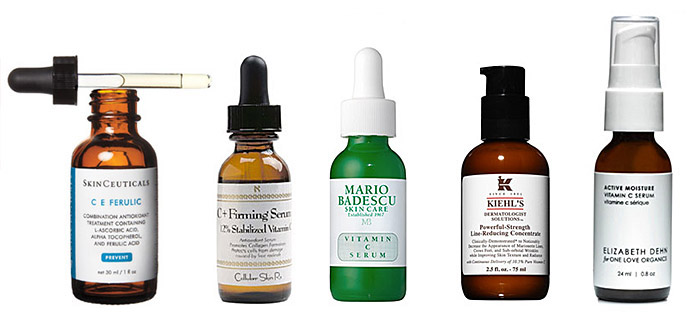
Quote by ]Vit. C as antioxidant
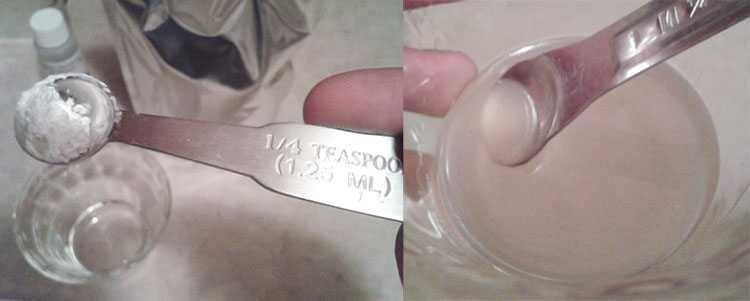
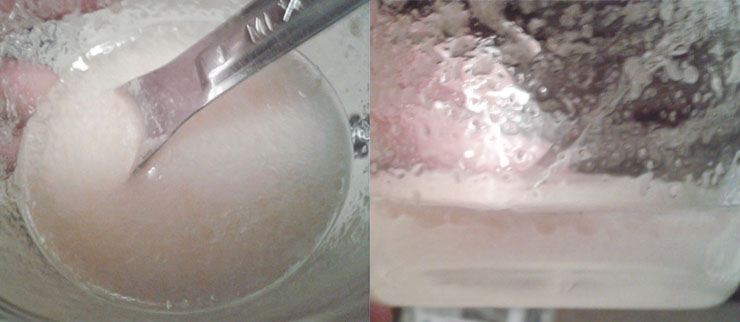
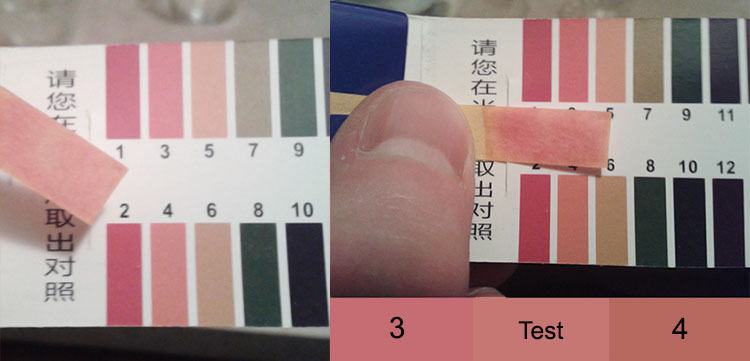
Vit. C, the most plentiful antioxidant in human skin, forms a part of the complex group of enzymatic and non-enzymatic antioxidants that co-exist to protect the skin from reactive oxygen species (ROS). As Vit. C is water soluble, it functions in the aqueous compartments of the cell.[4] When the skin is exposed to UV light, ROS such as the superoxide ion, peroxide and singlet oxygen are generated. Vit. C protects the skin from oxidative stress by sequentially donating electrons to neutralize the free radicals.
UVA mutates and destroys collagen, elastin, proteoglycans and other dermal cellular structures.[2] Thus, UVA causes skin ageing and possibly melanoma formation. UVB causes sunburn, ROS, epidermal mutations and skin cancer. Sunscreens when properly applied prevent UV-induced erythema and thymine dimer mutations that contribute to cutaneous carcinogenesis. However, sunscreens block only 55% of the free radicals produced by UV exposure.
Antioxidants are necessary for neutralizing the ROS formed due to UV exposure.[2] To optimize UV protection, it is important to use sunscreens combined with a topical antioxidant. Vit. C does not absorb UV light but exerts an UV-protective effect by neutralizing free radicals, while this effect is not seen with sunscreens. Under laboratory conditions, it has been shown that application of 10% topical Vit. C showed statistical reduction of UVB-induced erythema by 52% and sunburn cell formation by 40-60%.[3]
Vit. C and collagen synthesis
Vit. C is essential for collagen biosynthesis. It has been proposed that Vit. C influences quantitative collagen synthesis in addition to stimulating qualitative changes in the collagen molecule.[2] Vit. C serves as a co-factor for the enzymes prolysyl and lysyl hydroxylase, the enzymes that are responsible for stabilizing and cross-linking the collagen molecules.[2] Another mechanism by which Vit. C influences the collagen synthesis is by stimulation of lipid peroxidation, and the product of this process, malondialdehyde, in turn stimulates collagen gene expression.[2]
Vit. C also directly activates the transcription of collagen synthesis and stabilizes procollagen mRNA, thereby regulating collagen synthesis.[2,3] Signs and symptoms of Scurvy, a deficiency disease of Vit. C, are due to impaired collagen synthesis. Clinical studies have shown that the topical use of Vit. C increases collagen production in young as well as aged human skin.[3,6]
Vit. C as a depigmenting agent
When choosing a depigmenting agent, it is important to differentiate between substances that are toxic to the melanocyte and substances that interrupt the key steps of melanogenesis. Vit. C falls into the latter category of depigmenting agents. Vit. C interacts with copper ions at the tyrosinase-active site and inhibits action of the enzyme tyrosinase, thereby decreasing the melanin formation.
Anti-inflammatory action of Vit. C
As stated earlier, Vit. C inhibits NFkB, which is responsible for the activation of a number of pro-inflammatory cytokines such as TNF-alfa, IL1, IL6 and IL8.[2,3] Therefore, Vit. C has a potential anti-inflammatory activity and can be used in conditions like acne vulgaris and rosacea. It can promote wound healing and prevent post-inflammatory hyperpigmentation.[2,3]
Quote by [url=http://www.smartskincare.com/treatments/topical/vitc.html
Smartskincare.com]There are, however, some complicating circumstances often disregarded by manufacturers. In particular, ascorbic acid, the principal natural form of vitamin C, is relatively unstable (unless it is in a dry form). In the presence of air or other oxidizing agents, it undergoes oxidation.
A number of skin care companies offer highly concentrated stabilized vitamin C products, which (at least in theory) are supposed to be consistently effective. However, these products are usually quite expensive. Furthermore, even stabilized vitamin C products may be at least somewhat degraded by the time you use them.
Quote by ]Although Vit. C alone can provide photoprotection, it works best in conjunction with Vitamin E (Vit. E), which potentiates the action of Vit. C four-fold. Hydrophilic Vit. C helps regenerate Vit. E, a liphophilic antioxidant.[1,3,5,6] Thus, Vit. C and Vit. E together protect the hydrophilic and lipophilic compartments of the cell, respectively. Vit. C and Vit. E synergistically limit chronic UV damage by significantly reducing both cell apoptosis and thymine dimer formation.[3,6]
A combination of 0.5% ferulic acid (a potent antioxidant of plant origin) with 15% Vit. C and 1% Vit. E can increase the efficacy of Vit. C eight-fold.[3] It was noted that this triple combination was very useful for the reduction of acute and chronic photodamage, and could be used for prevention of skin cancer in the future.[3]


Quote by [url=http://www.menshealth.com/best-life/all-guys-lie-about-height
MensHealth[/url]]The dozen males who agreed to be measured were, on average, just shy of 1.5 inches off their stated marks. And this was no random deviation; not a single error was made in the underestimating direction. (By contrast, six females were only half an inch short of their stated heights, attributable mostly to upward rounding to the DMV's whole numbers.)
(...) And I have good reason to suspect the deception of being even greater - that good reason being how many guys resembling hobbits walked straight past my scale and into the DMV entrance, yelling some variation on "I already know I lied".

Quote by seeker4
Oh, true, but most of those times he also had the "power of plot" on his side which happens a lot in comics. The winner is the one that the plot dictates should win.
You see this in superhero power scaling a lot. You can have the Hulk barely beating Cap in one storyline and then have him one shotting Galactus in the next.


Quote by squiffy
Gandalf would be walking away with his tail between his legs and his stick up his arse.


Quote by seeker4
Without watching, I'll pick Vader, though Bruce would give him a run for his money to be sure. The Force would likely give Vader enough of an edge over the utility belt.